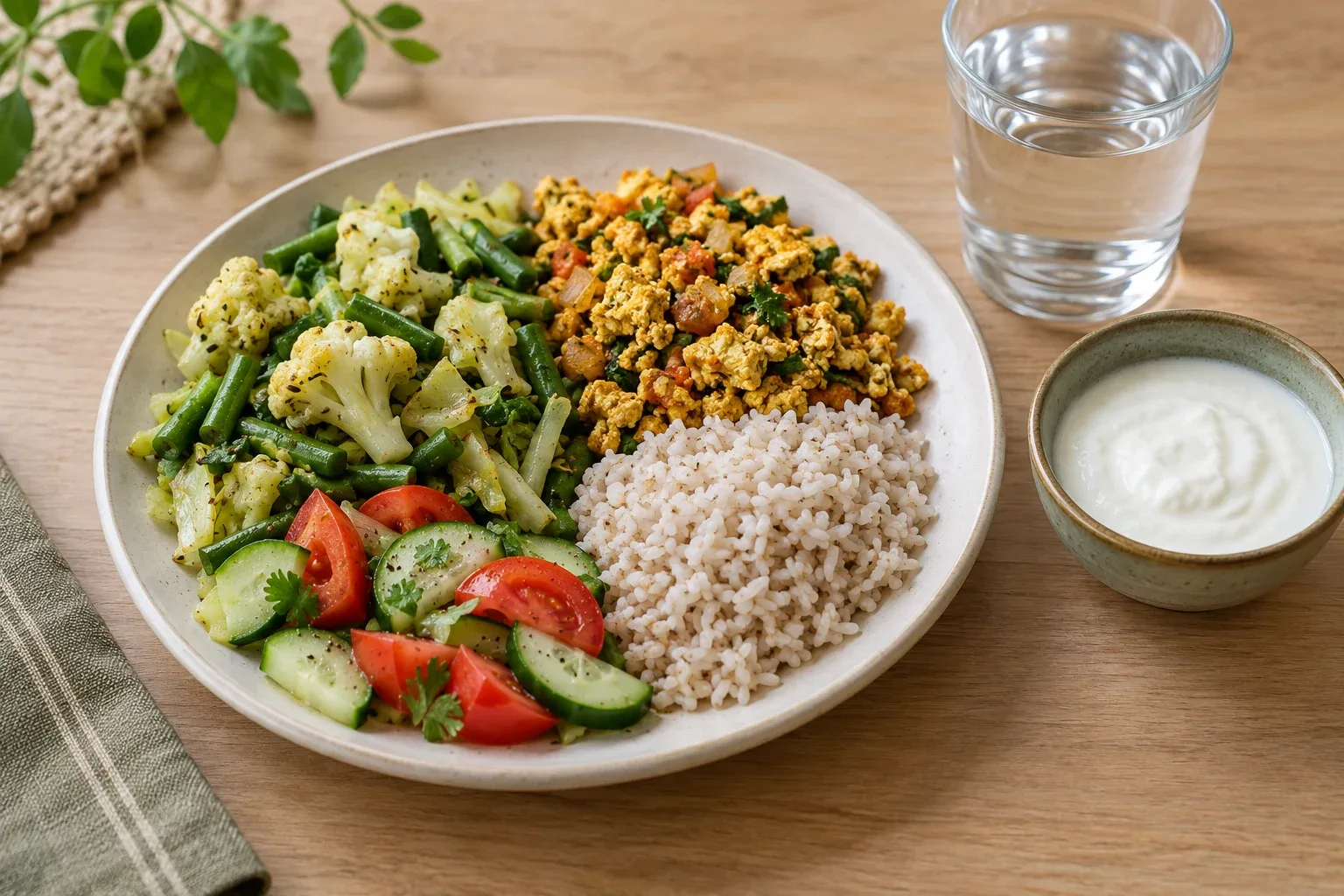
Plan everyday Indian meals with a diabetes diet chart, plate-method guidance and practical food swaps. Explore personalised nutrition support in Patiala.
“Do I have to stop eating roti and rice?” is a useful question to bring to a diabetes nutrition consultation. A practical plan should help you understand familiar meals, not leave you with a list of foods that feels impossible to cook for your family.
This diabetes diet chart in India uses everyday meal examples to explain what to consider. It is intended as a discussion guide for adults with type 2 diabetes, with no fixed carbohydrate or calorie allowance. For a plan tailored to your reports, treatment and routine, explore personalised diabetes nutrition support in Patiala.
What is an Indian diabetes diet chart
An Indian diabetes diet chart is a meal-planning guide that combines familiar foods with individual guidance on carbohydrate amounts, portions and timing. Roti, rice, pulses, vegetables, fruit and dairy can all be considered. A useful chart supports prescribed diabetes care; it does not replace medicine or glucose monitoring.
Why does diabetes meal planning matter
Diabetes affects many households. The ICMR-INDIAB study, published in 2023, estimated that 101 million people in India had diabetes in 2021. Its survey included adults aged 20 and older. This is a historical national estimate, not a current 2026 count or a figure for Patiala. Source: ICMR-INDIAB national study.
For global context, WHO reports that 830 million people were living with diabetes in 2022. The Indian and global estimates concern different populations and years, so they should not be combined to calculate a current share. Source: WHO diabetes fact sheet.
These figures explain the scale of the issue, not what an individual meal will do to your glucose. For that, your own medical information and eating routine are more useful than a headline statistic.
Can you eat roti and rice with diabetes
Roti and rice do not have to disappear from every diabetes meal plan. They are carbohydrate foods, so the amount eaten needs consideration alongside the rest of the meal. Your plan may use different portions from someone else’s, even if both of you eat the same foods.
Think about the complete lunch: rice or roti, dal, vegetables, curd, fruit and drinks. A meal can contain several carbohydrate sources. Having a small rice serving and then adding a large portion of another carbohydrate food still changes the total.
CDC identifies grains, starchy vegetables, beans and lentils as sources of starch, and fruit and milk as foods containing natural sugars. Dal provides protein and fibre too, but that does not make it carbohydrate-free. Read CDC guidance on carbohydrate counting.
How does the diabetes plate method work with Indian food
The plate method is a visual starting point. CDC describes using a 9-inch plate: fill half with non-starchy vegetables, one-quarter with a lean protein choice and one-quarter with carbohydrate foods. Choose water or a low-calorie drink alongside it. This method supports meal organisation; it does not specify a personal carbohydrate target. Source: CDC diabetes meal planning.
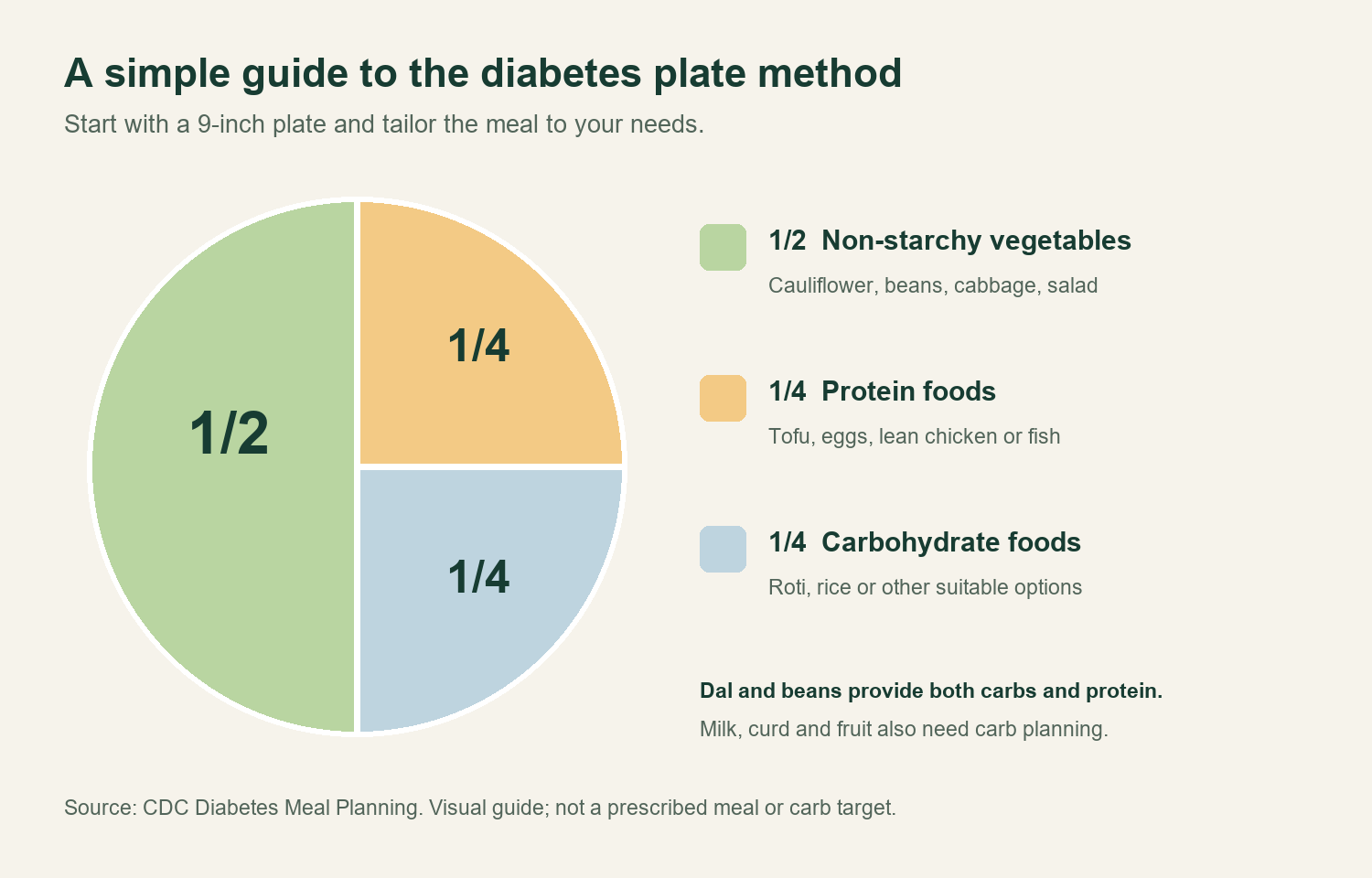
Plate-method proportions adapted from CDC guidance, with Indian food examples. Portions and mixed dishes still need individual consideration.
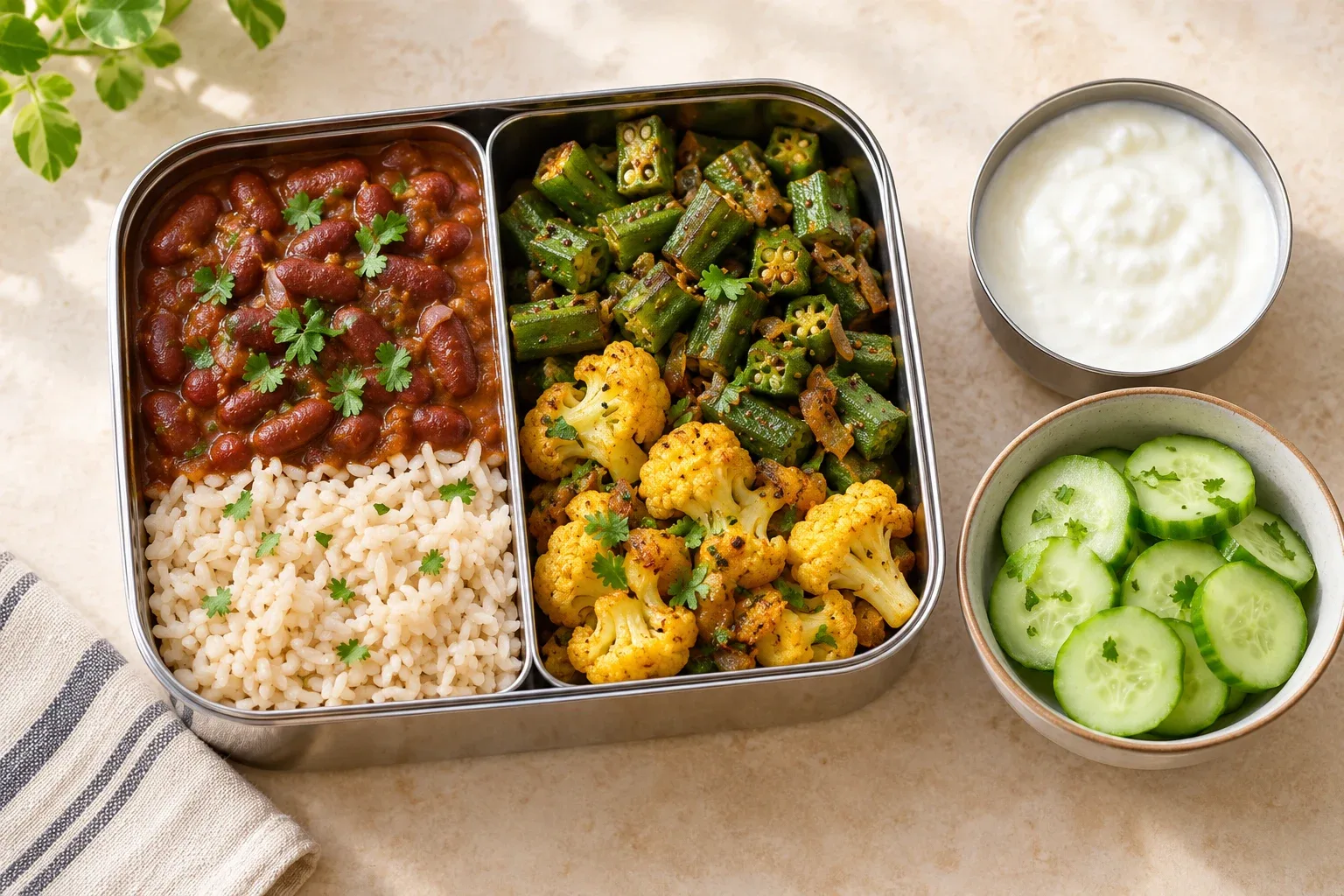
For an Indian meal, the vegetable section might include bhindi, cauliflower, cabbage, beans or salad. Tofu, eggs, fish or lean chicken can be protein options according to your preferences. A suitable roti or rice portion can occupy the carbohydrate section.
Mixed foods need extra thought. Dal, rajma and chole contribute both carbohydrate and protein. They do not fit neatly into a single nutrient box. Similarly, curd and fruit served alongside a meal add to its carbohydrate content. Tell your dietitian about the complete plate rather than assuming side dishes do not count.
A sample one-day diabetes diet chart with Indian meals
The example below shows meal combinations to discuss with your care team. It is not a calculated diet prescription: serving sizes, calories and carbohydrate grams have deliberately not been assigned. It needs adaptation for your medical needs, medication, allergies and food preferences.
Illustrative adult meal ideas for discussion
|
Meal |
Indian food example |
What to personalise |
|---|---|---|
|
Breakfast |
Moong dal chilla with plain curd and vegetables |
Chilla and curd contribute carbohydrate; set the amount with your plan. |
|
Lunch |
Roti, dal, bhindi or cauliflower, and salad |
Count the roti and dal together rather than treating dal as carb-free. |
|
If a snack is needed |
A planned portion of whole fruit, plain curd or another suitable option |
Choose according to hunger, medication and your agreed routine. |
|
Dinner |
Rice or roti with tofu, egg, fish or lean chicken and vegetables |
Choose a suitable grain portion; add vegetables and a protein option. |
|
Drinks across the day |
Water or unsweetened tea, where appropriate |
Milk and sweetened drinks add carbohydrate; include them in planning. |
A snack is not compulsory, and a bedtime snack should not be added automatically. Your care team can advise whether either is useful for your particular routine. NIDDK notes that meal timing depends on medication, activity and other conditions, and that skipping or delaying meals can cause low blood glucose with insulin or some other diabetes medicines. Source: NIDDK healthy living with diabetes.
How can you adapt the chart to a vegetarian household
Start with what your household already cooks. If Monday lunch is rajma and rice, discuss a suitable combination rather than assuming you need a separate “diet meal”. If dinner is roti and dal, talk through the roti size, dal quantity, vegetables and anything else served with it.
Tofu, paneer, plain curd and pulses offer different vegetarian options; suitability depends on the whole plan and personal tolerances. Do not replace all grains with unlimited pulses or load every meal with paneer. The goal is a workable menu with amounts that fit your needs.
Write down a typical weekday and weekend menu before your appointment. Include oil or ghee used in cooking, tea additions, snacks, fruit and drinks. These details help the practitioner understand the real routine instead of an idealised version of it.
What food swaps are practical for everyday routines
Meal-planning changes to discuss with your dietitian
|
Usual habit |
Practical option |
What to remember |
|---|---|---|
|
Most of the plate is rice |
Plan the rice portion and include vegetables and a protein option |
The right amount is individual |
|
Sweetened tea several times a day |
Review added sugar and how many cups you drink |
Milk also contributes carbohydrate |
|
Fruit juice as a routine drink |
Discuss a whole-fruit portion and water as the drink |
Fruit quantity still needs planning |
|
A tiffin that contains only roti |
Pack a suitable roti portion with sabzi and a protein-containing side |
Count carbohydrate in pulses too |
|
No plan for a delayed workday lunch |
Agree a practical meal-timing arrangement with your care team |
Medication can affect the safest routine |
These changes are prompts for a conversation, not promises of a particular glucose reduction. CDC notes that juice raises blood sugar more quickly than whole fruit, and that eating carbohydrate with protein, fat or fibre can slow the rise. That is another reason to consider the whole meal, while still planning the carbohydrate amount. CDC meal-planning explanation.
Are jaggery, honey and “diabetic” foods automatically better choices
Replacing table sugar with honey or jaggery does not mean you can ignore sugar in the meal. Likewise, a “diabetic” label is not enough to decide whether a packaged food fits your plan. Look at the serving size and total carbohydrate information, not only the product’s front label.
Carbohydrate counting considers the amount of carbohydrate in what you actually eat or drink. A packet can contain more than one serving, so check how the label relates to your portion. CDC guidance on carbohydrates and serving amounts.
What should you bring to a diabetes nutrition consultation
Bring your questions and the information requested by the clinic. Useful discussion material may include:
- Your current medicines and their prescribed timing.
- Recent HbA1c or other relevant reports, if available.
- Glucose records collected according to your clinician’s instructions.
- A usual day of meals, snacks, drinks and work hours.
- Food preferences, allergies and other medical needs.
Agree on practical next steps: what to eat on a busy morning, how to pack lunch and how your plan will be reviewed. Do not change a dose or medicine schedule based on this article. If you experience low blood glucose, follow the action plan provided by your treating team rather than using this meal chart to treat it.
Read more about Dt. Tamanna Aggarwal and explore online nutrition consultations if travelling to Patiala is difficult.
Frequently asked questions
Can a person with diabetes eat roti and rice
Yes, these can be included in an individual meal plan. The amount, meal combination and timing matter. A dietitian can help plan familiar foods alongside your treatment and glucose-monitoring advice.
How many rotis should I eat if I have diabetes
There is no single number suitable for everyone. Roti size, flour quantity, other carbohydrate foods, activity and medication all affect the decision. Discuss your usual meal rather than relying on a universal roti rule.
Is dal free of carbohydrates
No. Dal, rajma and chole contain carbohydrates as well as protein and fibre. Account for them as part of the meal instead of adding unlimited amounts on top of an unchanged rice or roti portion.
Can I eat fruit
Fruit can fit an individual diabetes meal plan. Consider the type and amount, and include its carbohydrate contribution. Choose whole fruit more often than juice; a large juice serving is not interchangeable with a small whole-fruit portion.
Can this chart replace diabetes medicine
No. This is a general meal example, not treatment or a medicine-adjustment plan. Continue prescribed care and discuss changes with your treating clinician.
Can I get a diabetes diet plan in Patiala or online
Dietitian Tamanna offers nutrition consultation options at the Patiala clinic and online. Contact the clinic to confirm appointments, fees and follow-up arrangements.
Get a plan that fits your everyday meals
A useful diabetes meal plan should account for your treatment, family cooking and working hours. At your consultation, discuss the meals you eat most often and the changes you feel able to maintain. You can request a consultation with Dietitian Tamanna in Patiala or online.
Sources
- Anjana and colleagues — ICMR-INDIAB national cross-sectional study. Published in 2023; India count refers to the 2021 estimate.
- WHO — Diabetes. Fact sheet dated 14 November 2024; global count refers to 2022.
- CDC — Diabetes Meal Planning.
- CDC — Carb Counting.
- NIDDK — Healthy Living with Diabetes.
Editorial draft prepared for Dietitian Tamanna. Practitioner review of the meal examples and medical content is pending. General educational information; individual diabetes care requires personalised advice.
This article is for general education and is not a substitute for personal medical advice. Please consult your doctor before changing your diet if you have a medical condition.