Seven Day PCOS Diet Plan With Indian Meal Ideas
A PCOS diet plan needs to work on the days when you leave home early, eat with family and have little time to cook. A menu that depends on separate meals or expensive ingredients can be difficult to maintain. Start with the food already available in your kitchen and identify the parts of your routine that need support.
This seven-day PCOS diet plan offers Indian meal ideas for discussion with your practitioner. It does not assign calorie targets or promise changes in periods, fertility or body weight. For individual guidance, explore PCOS nutrition consultations in Patiala.
What is a useful PCOS diet plan
A useful PCOS diet plan is an eating routine tailored to your preferences, health needs and daily life. It can include familiar grains, pulses, vegetables, fruit and suitable protein foods. The aim is to build sustainable habits alongside appropriate medical care, with goals chosen for the individual.
What does the evidence say about PCOS and food
WHO estimates that PCOS affects 10–13% of reproductive-aged women. This is a global estimate, not a Patiala figure or an outcome from this practice. WHO also notes that healthy eating and physical activity matter even when they do not produce weight loss. Read the WHO PCOS fact sheet.
The 2023 International Evidence-based PCOS Guideline does not find one particular diet composition superior for the outcomes it assessed. It recommends a sustainable approach that reflects individual preferences and avoids unnecessarily restrictive, nutritionally unbalanced diets. See the international guideline, section 3.3.
That makes your own week a sensible starting point. Which meals are rushed? Is a long gap between lunch and dinner making evenings difficult? Do you need a vegetarian tiffin option? Answering these questions produces a more useful plan than copying a rigid menu without context.
Seven days of Indian meal ideas for PCOS
This table is an illustrative adult menu, not a nutritionally calculated prescription. Portion sizes, snacks and suitability need individual review. Pregnancy, diabetes, allergies and other conditions may require a different plan.
A flexible sample week using ordinary Indian food
|
Day |
Breakfast idea |
Lunch idea |
Dinner idea |
|
Monday |
Moong chilla and plain curd |
Roti, dal, bhindi and salad |
Vegetable khichdi and curd |
|
Tuesday |
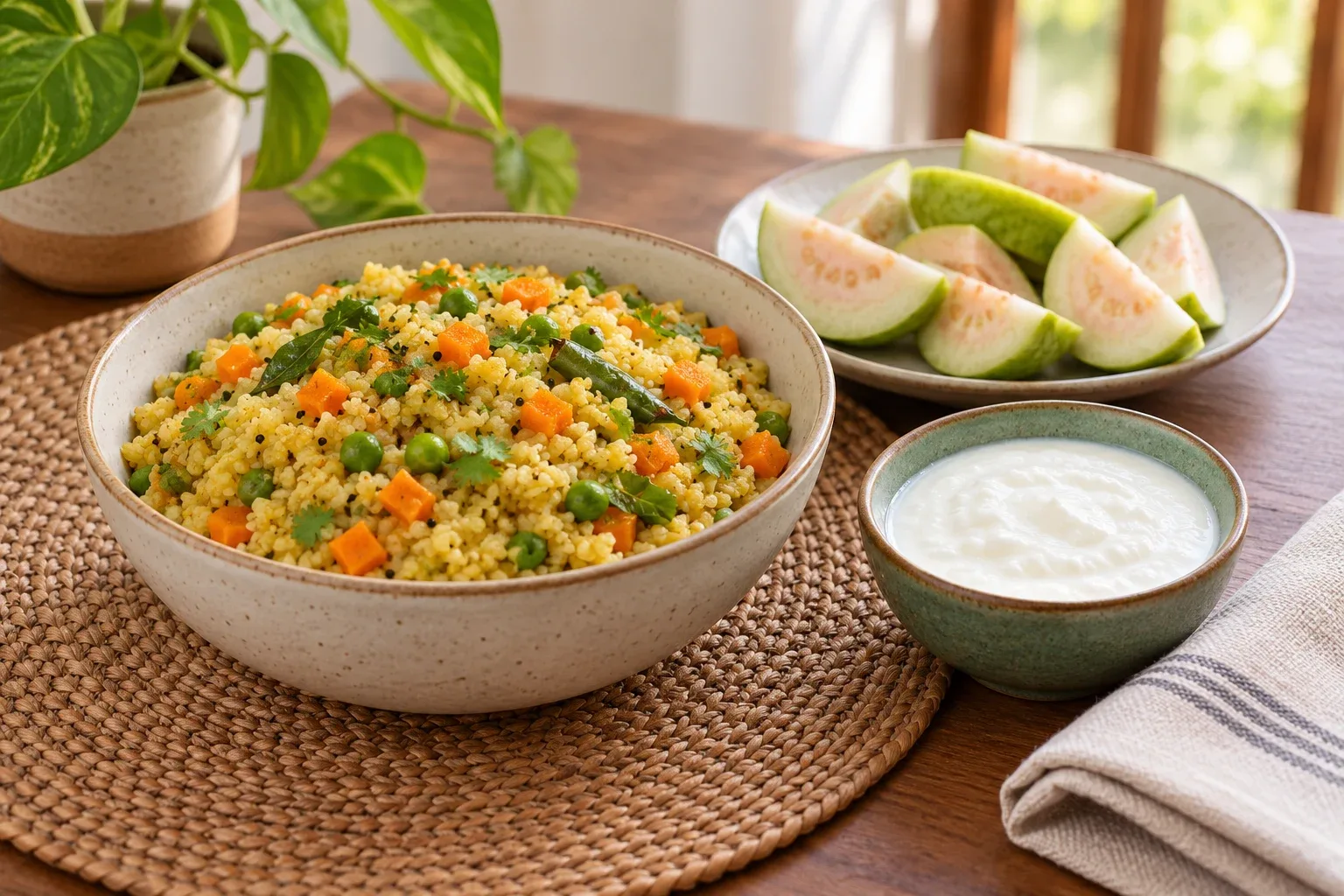
Vegetable dalia with curd |
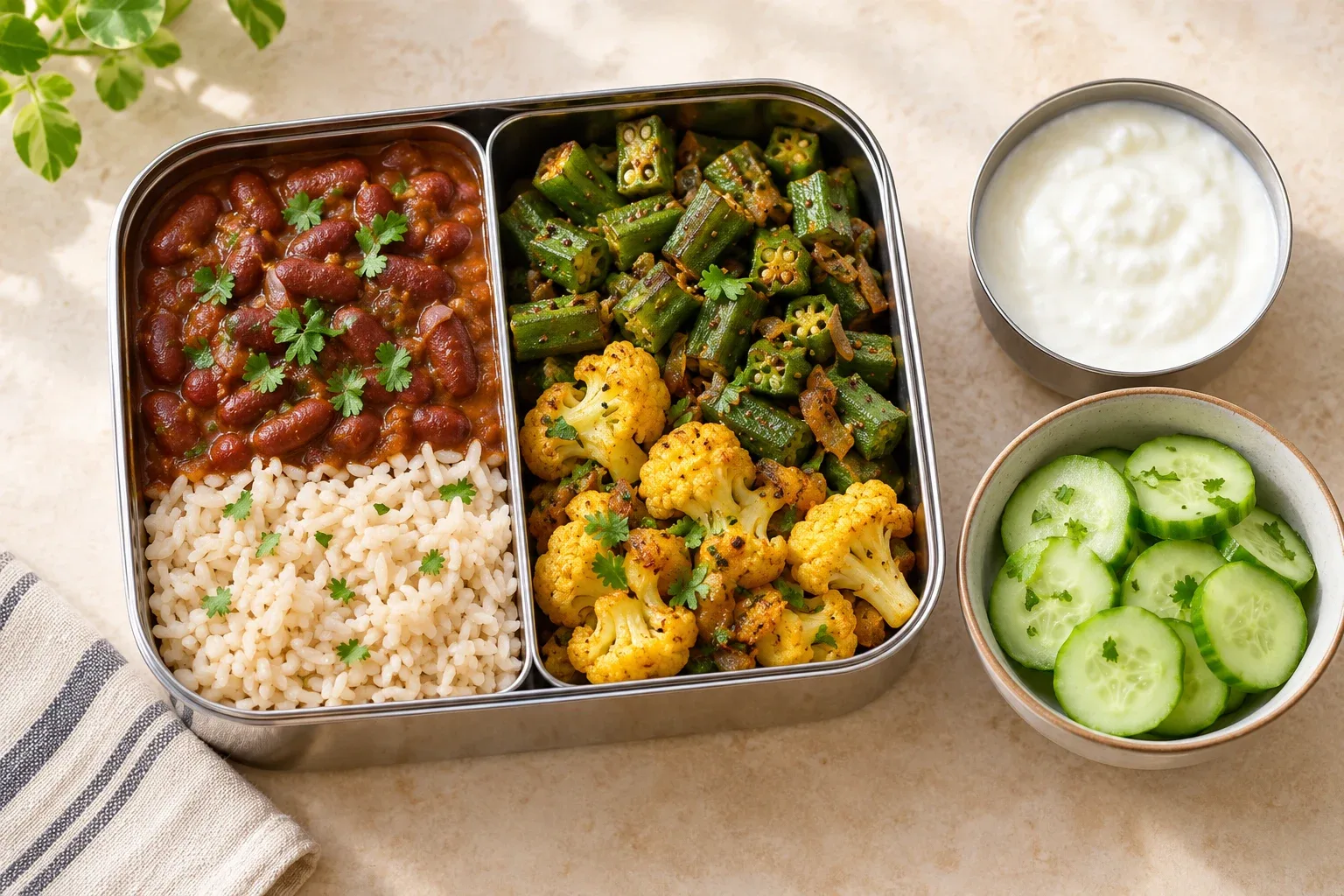
Rajma, rice and cooked vegetables |
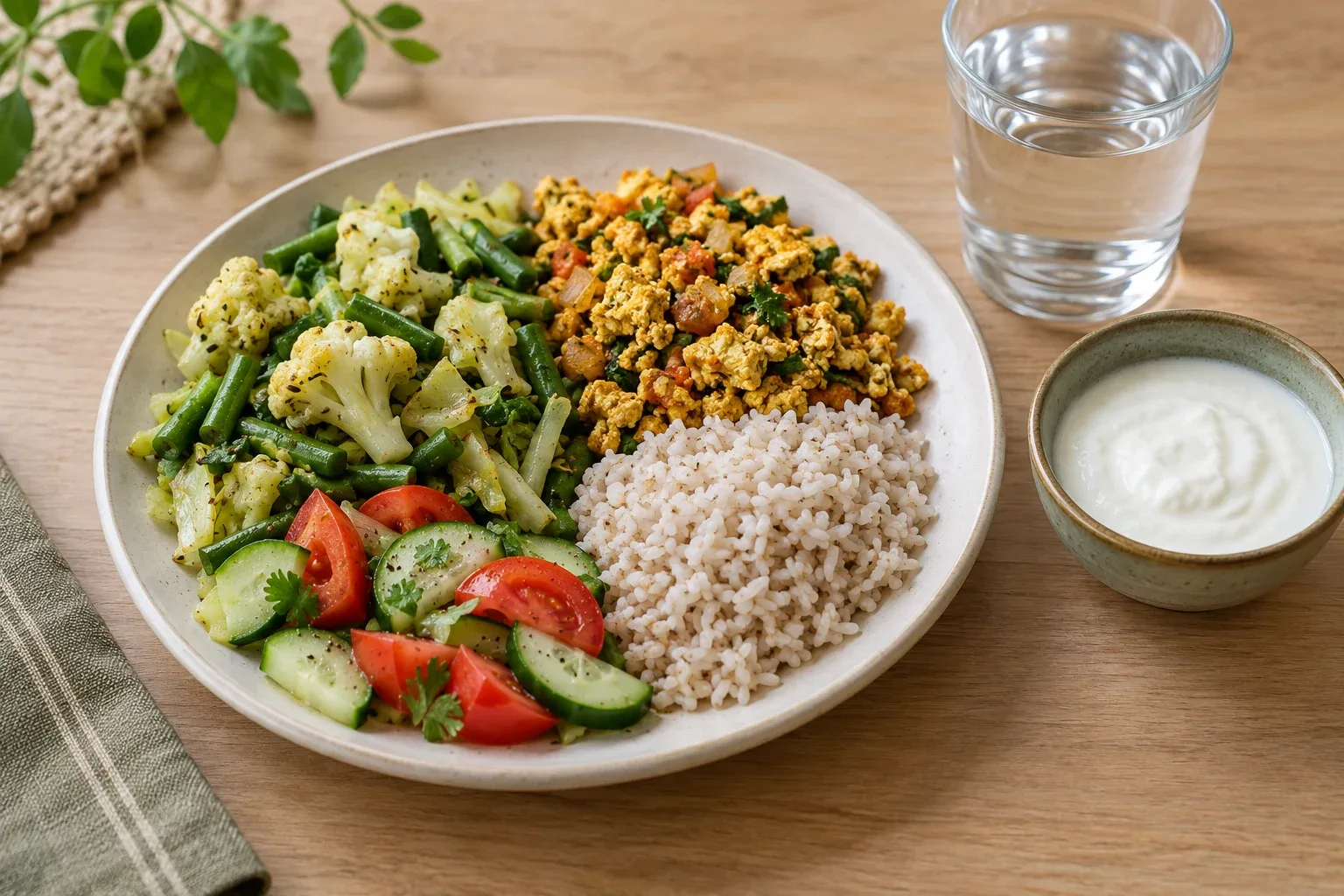
Roti, tofu bhurji and sabzi |
|
Wednesday |
Besan chilla with curd |
Roti, chana dal and cauliflower |
Rice, dal and mixed vegetables |
|
Thursday |
Idli and sambar |
Chole, a suitable grain portion and salad |
Roti with paneer or tofu and vegetables |
|
Friday |
Vegetable poha with plain curd |
Roti, dal and seasonal sabzi |
Vegetable dalia with a pulse-based side |
|
Saturday |
Vegetable-stuffed roti with curd |
Rice, rajma and vegetables |
Roti, dal and lauki |
|
Sunday |
Your preferred planned breakfast |
A family meal with vegetables and a protein option |
A simple repeat of a practical weekday meal |
Fruit, drinks and snacks can be fitted around your individual requirements. The table is not a complete shopping prescription and does not mean everybody needs an extra snack. Ask your practitioner about amounts rather than treating the examples as unrestricted foods.
How to adapt the menu to office days
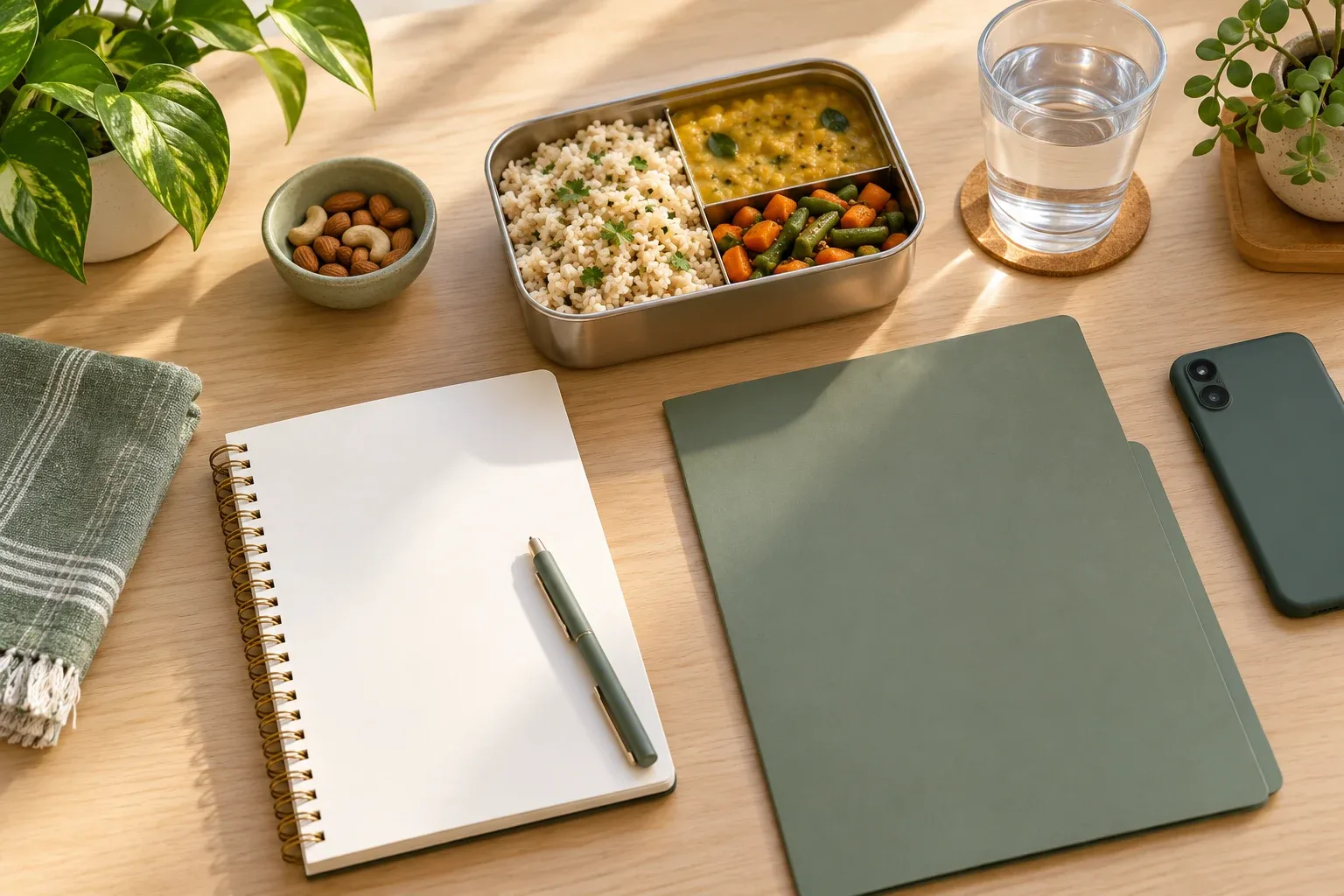
Choose two breakfasts you can prepare quickly. Keep ingredients for chilla ready or cook dalia in advance if that suits your household. Pick a tiffin that travels well and decide what you will do if lunch is delayed. A plan with a backup is easier to use than one that assumes every day runs on time.
At dinner, use the family meal as the starting point. Ask how your own serving can be adjusted instead of assuming you must cook a second meal. If someone else cooks, bring an example of the usual preparation to the consultation. The amount of oil, the ingredients and serving style are useful details.
Should you remove dairy or gluten automatically
A PCOS diagnosis alone is not a reason to copy a restrictive diet from social media. Discuss any symptoms, diagnosed conditions and food tolerances before removing entire groups. If an exclusion is needed for a separate medical reason, ask what will replace the foods you remove so that the menu remains workable.
What should you monitor besides body weight
Agree on the goals that matter to you. These may include more regular meals, easier food preparation, keeping follow-up appointments or a symptom record requested by your clinician. Changes in menstrual patterns, skin symptoms or energy should be reviewed in their clinical context rather than used to declare a food plan successful or unsuccessful on its own.
Do not stop prescribed treatment or use a meal chart to diagnose PCOS. Persistent symptoms deserve medical assessment. Tell the practitioner if food tracking or weight-focused advice feels distressing so the consultation can be adjusted.
Frequently asked questions
Does PCOS mean I must lose weight
No single weight goal applies to everyone with PCOS. Discuss your health needs and preferences with your care team. Healthy routines can be worthwhile without making weight loss the only measure of progress.
Can I include roti and rice
These foods can be considered within an individual plan. Discuss the amount and what accompanies them, along with any other medical needs. The sample menu is a set of options rather than a fixed daily allowance.
Will a seven-day plan regulate my periods
The table cannot predict or guarantee changes in periods. It organises meals for a week; it is not a seven-day treatment course. Your clinician should assess symptoms and treatment needs.
Can I follow a vegetarian plan
Yes, a vegetarian approach can be discussed and adapted to your preferences. Bring your usual meals, tolerances and relevant reports so the practitioner can consider the overall diet.
Build a routine you can use
For a plan that considers family food, work hours and medical care, ask about an online nutrition consultation or contact Dietitian Tamanna for a Patiala appointment.
Sources
This article is for general education and is not a substitute for personal medical advice. Please consult your doctor before changing your diet if you have a medical condition.