Build a practical Indian vegetarian weight-loss routine with tiffin ideas, varied protein foods and simple workday planning tips. Explore personal guidance.
A vegetarian weight-loss diet can be built from food your household already cooks. The challenge is often what happens between those meals: a rushed breakfast, a tiffin with little variety, or arriving home without a dinner plan. This guide focuses on those workday decisions rather than another rigid seven-day menu.
If you would like amounts and choices tailored to you, explore personalised weight-management nutrition in Patiala. A general article cannot determine your calorie needs or predict how much weight you will lose.
What makes an Indian vegetarian weight-loss plan practical
A practical vegetarian plan provides suitable meals across your day, uses foods you can afford and includes sources of protein as well as vegetables and grains. It also considers serving amounts and preparation. Being vegetarian describes the foods you exclude; it does not by itself make every meal suitable for weight loss.
Start with the routine you actually have
Describe a normal workday before choosing a menu. Note when you leave home, where lunch comes from and when you usually eat dinner. Include tea, snacks, drinks and weekend differences. If the plan assumes a cooked breakfast but your morning allows five minutes, that problem needs solving first.
Choose one change for each difficult part of the day. For example, prepare a breakfast component the night before, decide on a tiffin combination and keep a simple dinner option available. These are planning ideas to adapt, not rules everyone must follow.
How to add variety and protein to vegetarian meals
Dal, rajma, chole, tofu, paneer, curd and eggs where included can provide different protein options. The NHS advises vegetarians to pay attention to iron and vitamin B12 as part of a balanced diet. Suitable choices depend on the overall diet and whether you eat dairy or eggs. Read NHS vegetarian diet guidance.
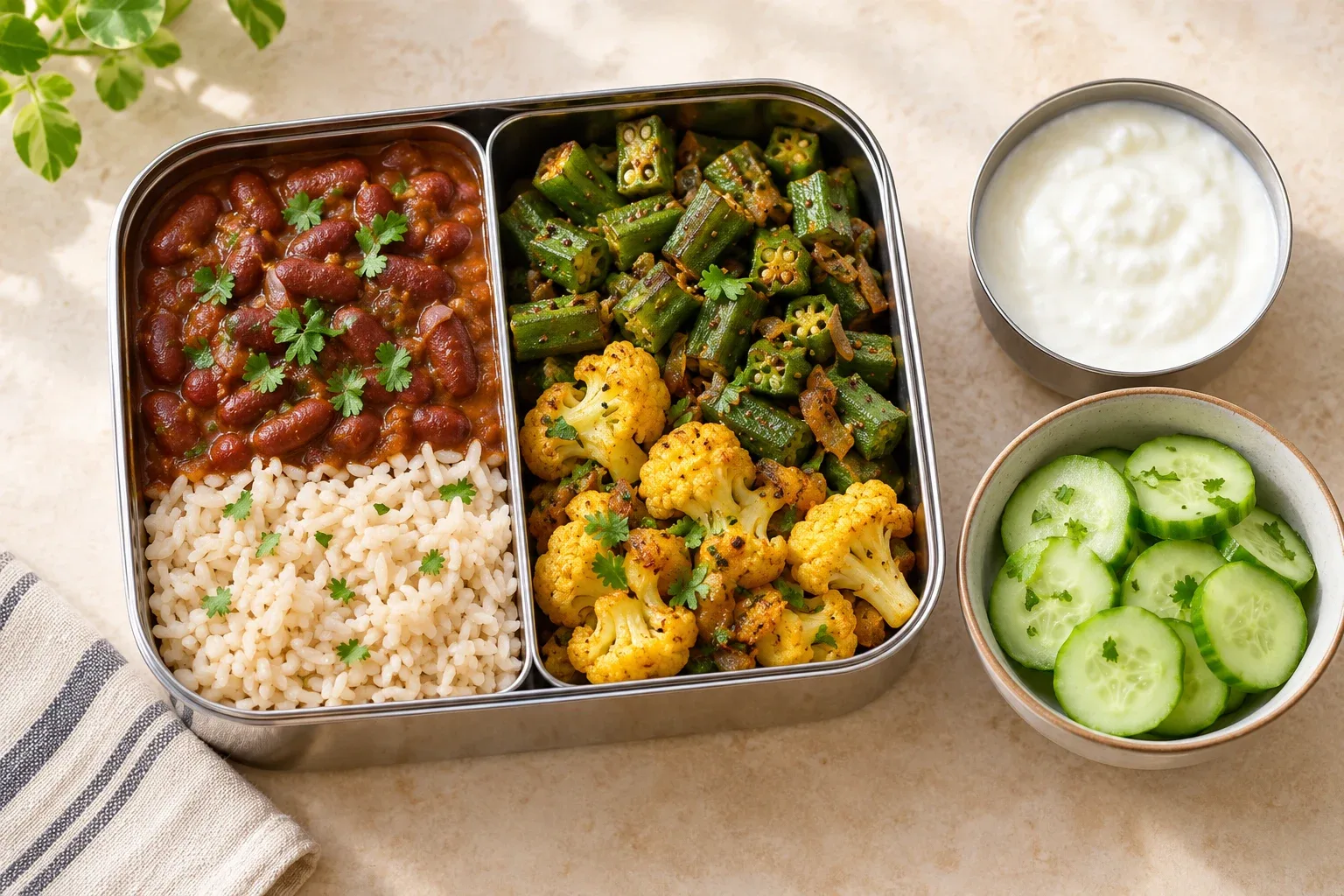
Instead of asking for a single best vegetarian food, look at combinations you can repeat. A tiffin might contain a suitable rice portion, rajma and vegetables. Another day it could contain roti, tofu and sabzi. If a food causes symptoms or does not fit your preferences, ask for an alternative rather than forcing it into every meal.
A flexible vegetarian workday example
This is an illustrative adult menu with no assigned calories or serving sizes. It is not a complete prescription. Individual medical needs, allergies and nutritional requirements may change the choices.
Vegetarian meal ideas that can travel with a workday
|
Part of the day |
Example |
Planning question |
|
Before leaving home |
Prepared moong chilla with curd, or another convenient breakfast |
Can some preparation be done the night before |
|
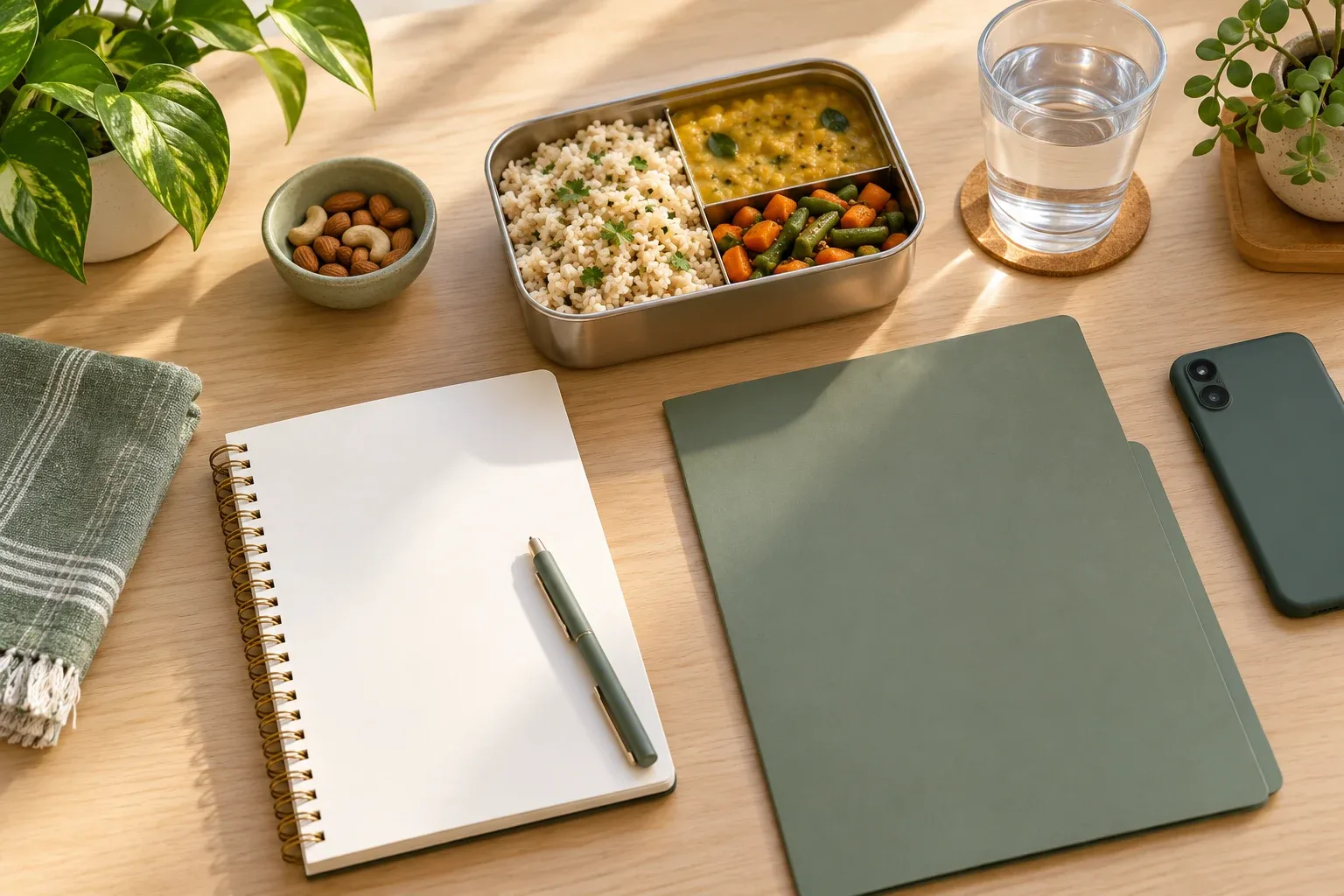
Lunch tiffin |
Rice, rajma and seasonal vegetables |
Does the container fit the amount agreed for your plan |
|
If a snack is useful |
Whole fruit, roasted chana, plain curd or a suitable nut portion |
Are you hungry or filling a very long gap |
|
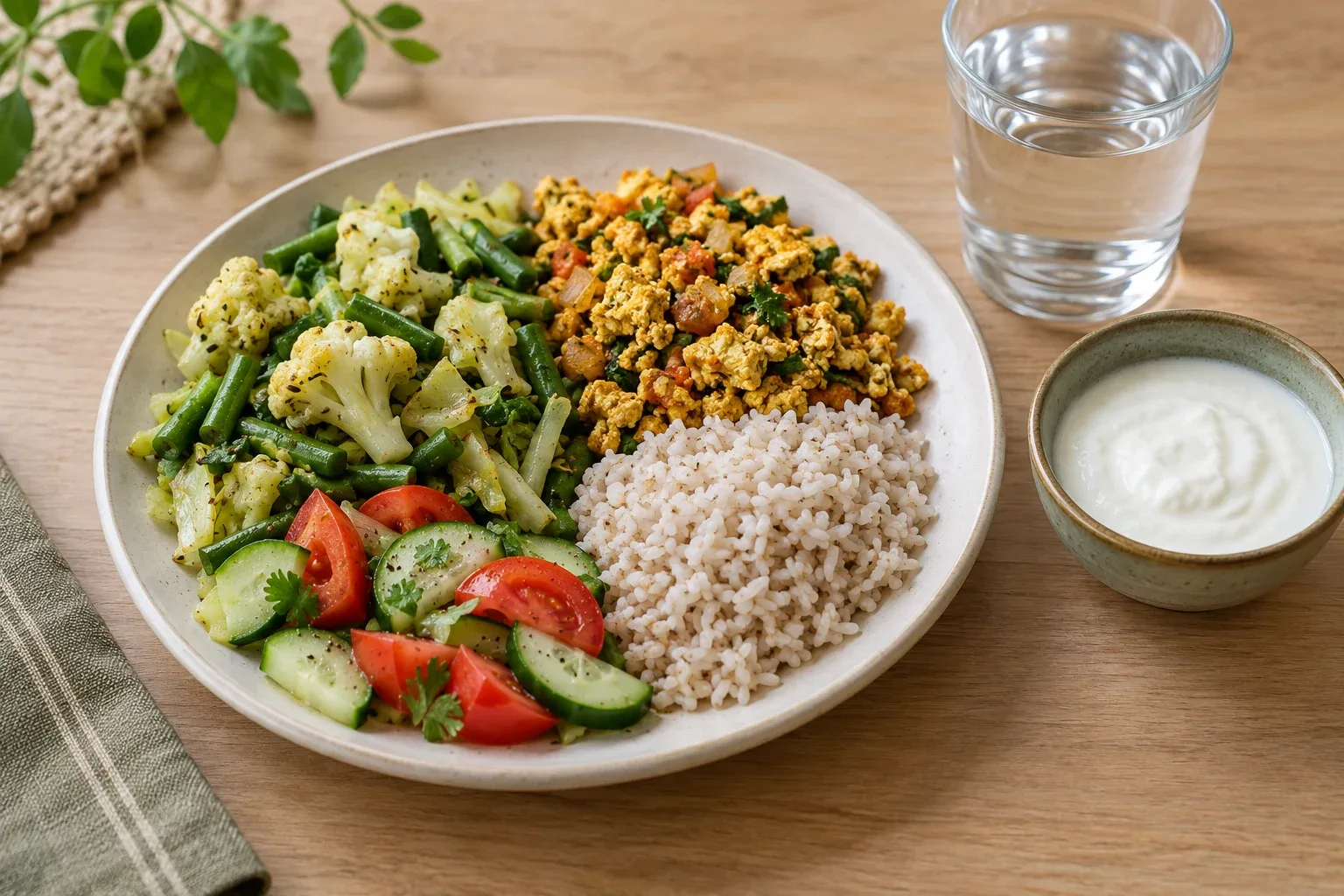
Dinner |
Roti, dal or tofu, and sabzi |
What is the simplest option available after work |
The snack is optional. Oil, ghee, nuts and dairy products also need consideration in the overall day. A food does not become unlimited because it appears on a healthy-food list. Bring serving bowls or photographs to your consultation if describing amounts is difficult.
Use seasonal produce without making meals complicated
WHO recommends at least 400 g of fruit and vegetables daily for people older than 10, alongside at least 25 g of naturally occurring dietary fibre. These are general healthy-eating recommendations, not an individual weight-loss target. Source WHO Healthy diet.
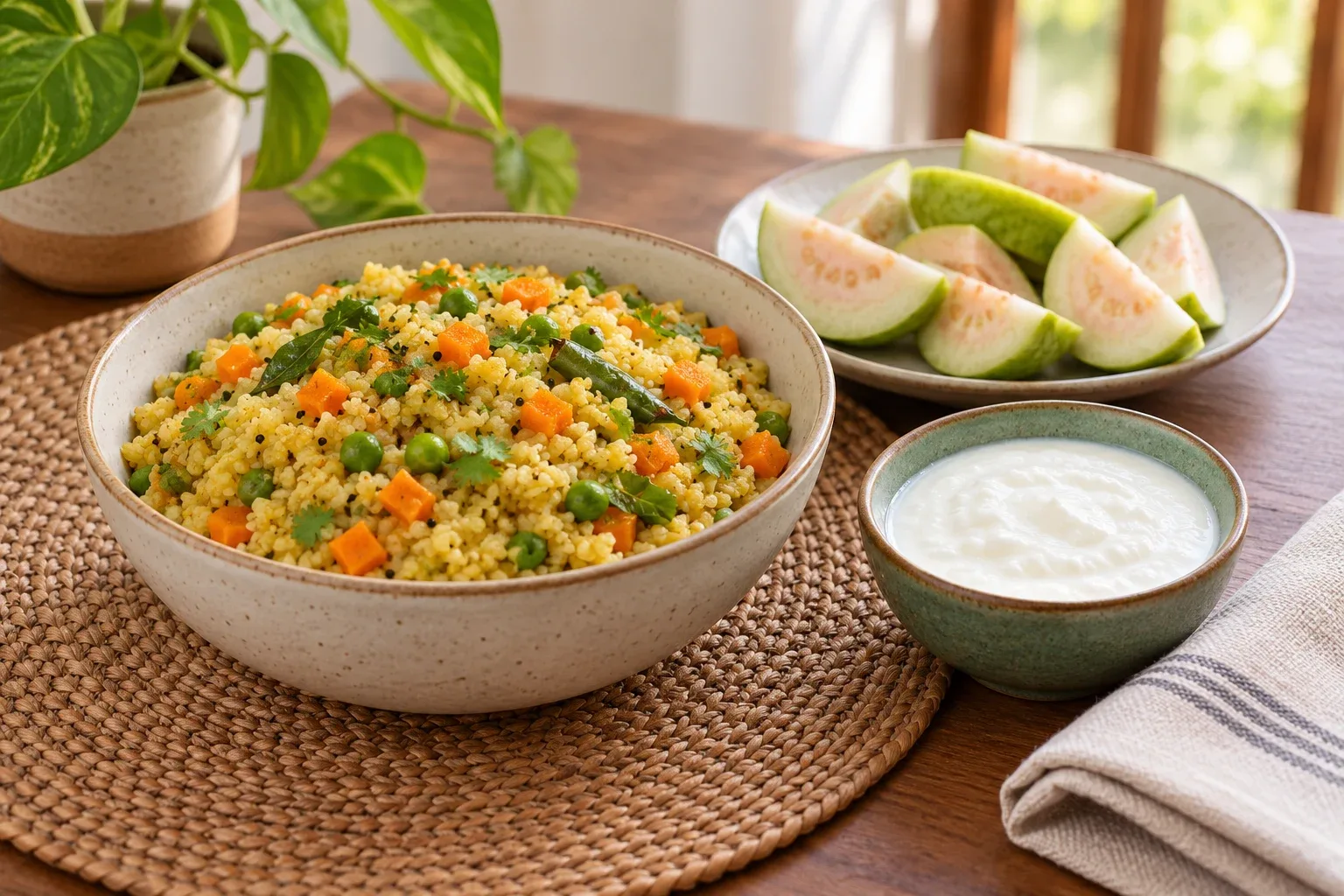
For a busy household, preparation may matter more than variety in any single meal. Choose vegetables you will actually cook, wash salad ingredients safely and keep a fruit option available if that suits your needs. Frozen vegetables can be a practical backup when fresh shopping does not happen.
What weight-loss goal is realistic
NIDDK describes an initial goal of 5–10% of starting weight over six months for appropriate weight-management programmes. It also emphasises an approach tailored to health needs, culture and preferences. This guidance is not a promise of an individual result. Read NIDDK guidance on choosing a programme.
Discuss whether weight loss is appropriate for you and what progress should mean. A plan may need to prioritise regular eating, adequate nutrition or management of a medical condition. Avoid making the weekly scale reading the only reason to keep or abandon a workable routine.
What to do when the plan does not fit
Identify the specific obstacle. If a tiffin leaks, choose another dish. If breakfast preparation is too long, simplify it. If you repeatedly arrive home hungry, discuss meal timing and lunch adequacy rather than only cutting dinner. A review should help solve problems rather than produce another long list of restrictions.
Frequently asked questions
Do I have to eat paneer every day
No single food is compulsory. A vegetarian routine can use different protein-containing foods according to your preferences, tolerances and individual plan.
Should I remove roti and rice completely
Not automatically. Ask about amounts and the complete meal rather than treating grains as the only issue. Your medical needs may affect the advice.
Do I need a protein supplement
A generic blog cannot decide that. Review your food intake and individual requirements with a qualified practitioner before starting a product.
How is this different from a general weight-loss chart
This guide focuses on vegetarian workday planning and practical alternatives. It does not replace an assessment or provide a fixed calorie allowance.
Make your next workday easier to plan
For support that fits familiar Indian food and your schedule, explore online nutrition consultation options or contact Dietitian Tamanna.
Sources
This article is for general education and is not a substitute for personal medical advice. Please consult your doctor before changing your diet if you have a medical condition.