
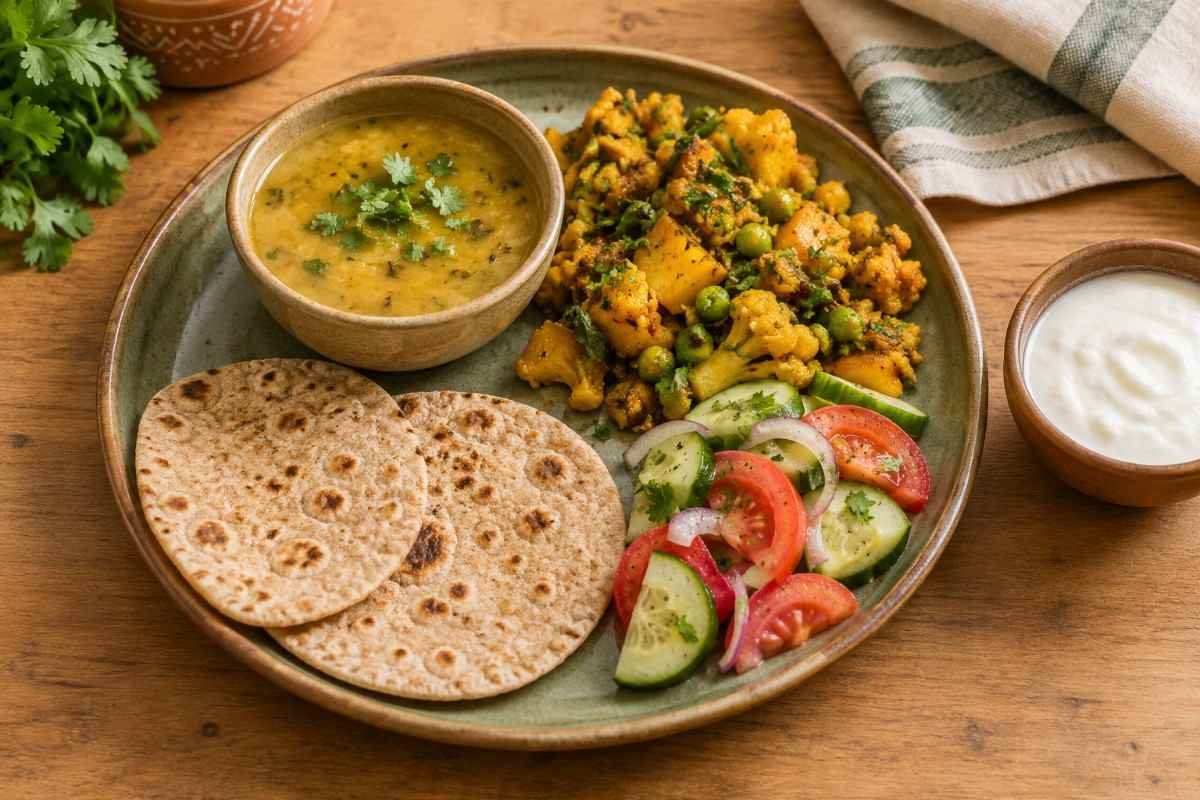
Explore an Indian weight loss diet chart with a seven-day meal example, practical food swaps and realistic goals. Get personalised guidance in Patiala.
Looking for a weight loss diet chart that fits your kitchen? You can start with foods you already know: dal, roti, rice, sabzi, dahi and seasonal fruit. The useful question is how to combine them in a way that suits your needs and is practical on an ordinary workday.
This guide offers an Indian meal-planning example, everyday swaps and a realistic way to think about progress. For support tailored to your routine and health history, explore personalised weight loss diet plans in Patiala.
What is an Indian weight loss diet chart
An Indian weight loss diet chart is a meal-planning guide built around familiar foods, with choices and portions adjusted to an individual’s needs. It usually combines grains, vegetables, pulses or other protein foods, fruit and dairy or suitable alternatives. A sample chart provides ideas; it does not determine your calorie needs.
What do the statistics tell us about weight management
Weight concerns are common, and they are influenced by more than willpower. WHO describes obesity as a chronic condition shaped by biological, social, environmental and behavioural factors. Its fact sheet, updated on 7 October 2026, reports that 1 in 7 people worldwide were living with obesity in 2024. It also reports that 45% of adults aged 18 and over were overweight in 2024. These are global figures, not estimates for Patiala or Tamanna’s clients. Source: WHO obesity and overweight fact sheet.
WHO population estimates and NIDDK goal guidance describe different measures; they are not a forecast of individual results.
For a more realistic planning horizon, the US National Institute of Diabetes and Digestive and Kidney Diseases describes an initial goal of 5% to 10% of starting weight over six months. Suitability and goals should be individualised. For an adult starting at 80 kg, that percentage equals 4–8 kg; this is an arithmetic example, not a promised result or a target for everyone. Source: NIDDK guidance on choosing a weight-loss programme.
A seven-day plan is therefore a way to organise meals for one week. It is not a promise to change your body in seven days.
How can you build a practical Indian meal
Start by looking at the whole meal rather than removing a single food. A roti-only lunch, for example, can be made more varied by including dal, sabzi and curd. The amount of each food still needs to suit the person eating it.
- A grain or starch: roti, rice, oats, dalia or another familiar option.
- A protein-containing food: dal, rajma, chole, tofu, paneer, curd, eggs, fish or chicken, according to preference.
- Vegetables: cooked seasonal sabzi, salad or a combination.
- Variety across the day: include fruit and other suitable foods instead of repeating the same restricted menu.
WHO recommends at least 400 g of fruit and vegetables daily for people older than 10, alongside at least 25 g of naturally occurring dietary fibre. These are general healthy-eating recommendations, not a complete personalised weight-loss prescription. Pulses, whole grains, fruit and vegetables offer practical ways to add variety and fibre. Source: WHO healthy diet guidance.
There is no universal roti count or calorie allowance that fits every reader. Age, activity, appetite, body size, medical history and treatment all matter. Use the chart below to choose meals, then get portions tailored where needed.
Seven-day Indian diet chart for weight loss planning
This is an illustrative adult meal-planning example, not a nutritionally calculated or prescribed diet. It does not specify calories or serving sizes. It needs adaptation for individual requirements, allergies and medical conditions. Children, pregnant or breastfeeding people, and anyone with an eating-disorder history need guidance appropriate to their circumstances.
Seven days of Indian meal ideas with vegetarian options
|
Day |
Breakfast |
Lunch |
Dinner |
|---|---|---|---|
|
Monday |
Moong dal chilla with plain curd |
Roti, dal, seasonal sabzi and salad |
Vegetable khichdi with plain curd |
|
Tuesday |
Vegetable oats with plain curd |
Rajma, rice and cucumber salad |
Roti, mixed vegetables and tofu or paneer |
|
Wednesday |
Vegetable poha with plain curd |
Roti, chana dal and bhindi |
Roti, vegetable sabzi and egg or tofu bhurji |
|
Thursday |
Besan chilla with mint chutney and curd |
Chole, rice and mixed vegetables |
Roti, dal and lauki or tori sabzi |
|
Friday |
Idli with sambar |
Roti, mixed dal, vegetables and curd |
Vegetable pulao with raita and a dal side |
|
Saturday |
Vegetable dalia with plain curd |
Roti, paneer or tofu and seasonal sabzi |
Rice, dal and cooked vegetables |
|
Sunday |
Vegetable-stuffed roti with curd |
Home-cooked family meal with a pulse or protein option |
Roti, dal or beans and seasonal vegetables |
If a snack suits your needs: consider a fruit, plain curd, roasted chana or a suitable portion of nuts. A snack is optional; include it according to hunger, routine and your individual plan. Water, plain chaas or unsweetened tea can be drink choices where appropriate.
How to make this chart work on a busy week
Choose two pulses, two breakfast options and a few seasonal vegetables before shopping. Cook enough dal for more than one meal and keep ingredients ready for a quick sabzi or chilla. Repeating a convenient meal is fine; the chart is a flexible example rather than seven different menus you must follow perfectly.
If you eat eggs, fish or chicken, discuss suitable alternatives to the vegetarian protein choices. If you avoid dairy, use an appropriate alternative rather than simply removing that part of the meal. Food safety, allergies and personal tolerances also need consideration.
Which food swaps fit everyday Indian routines
A useful swap solves a specific problem in your day. It should leave you with a workable meal, rather than a rule that becomes difficult to follow.
Examples to discuss when adapting your routine
|
Usual routine |
Option to try |
Practical purpose |
|---|---|---|
|
Tea and biscuits as a rushed breakfast |
Keep tea and add a prepared chilla with curd |
Make breakfast a more varied meal |
|
A lunch that is mainly rice or roti |
Add dal or another protein option and vegetables |
Broaden the meal without banning the grain |
|
A sweetened packaged drink with lunch |
Water or an unsweetened option you enjoy |
Reduce routine added-sugar intake |
|
No food prepared after a late workday |
Keep cooked dal, vegetables and a grain option ready |
Make an ordinary home meal convenient |
|
Skipping a meal and arriving very hungry |
Plan a meal or suitable snack around your schedule |
Create a routine that is easier to maintain |
Portions and preparation still matter. Foods labelled healthy can contribute substantial energy if the amount of oil, ghee, nuts or other ingredients changes. Be specific about the meals you actually eat when discussing a plan with a dietitian.
How should you review your progress
Look beyond whether one day’s weight moved up or down. Keep brief notes on your meal routine, hunger, activity and the changes you can maintain. If weighing yourself is useful and comfortable for you, compare measurements under similar conditions rather than repeatedly checking through the day.
Review what is getting in the way. Is breakfast too time-consuming? Does the lunch plan travel well? Are dinner portions responding to a very long gap between meals? These questions make it easier to adjust the routine than simply deciding to try harder.
When do you need a personalised diet plan
Personalisation matters when general meal ideas do not account for your health needs, medication, nutritional requirements or circumstances. If you have diabetes, kidney disease, thyroid concerns, pregnancy-related needs or a history of disordered eating, discuss changes with an appropriately qualified clinician. Do not stop or alter prescribed medicine to follow an online chart.
You may also want individual guidance when you regularly lose and regain weight, your work schedule changes, or your food choices need to fit the whole family. Bring your usual meals, relevant reports and questions to the consultation.
Learn more about Dt. Tamanna Aggarwal, or explore online diet consultation options if you cannot visit the clinic.
Frequently asked questions
Can I eat roti and rice while trying to lose weight
Yes. Roti and rice can fit a weight-management plan. The suitable amount depends on your needs, activity and the rest of the meal. Pairing them with vegetables and a protein-containing food gives the meal more variety.
Will this seven-day diet chart help me lose a fixed number of kilograms
No fixed result can be predicted from this chart. It is a sample week of meal ideas, not a seven-day rapid-weight-loss programme. Your starting weight, health, portions, activity and consistency affect progress.
Is a vegetarian diet suitable for weight management
A vegetarian eating pattern can be suitable when it meets your individual nutrition needs. Include varied protein-containing foods such as pulses, beans, tofu, curd or paneer, depending on your preferences and tolerances.
Is it necessary to skip dinner
Skipping dinner is not a requirement of this sample plan. Choose a routine that meets your needs and is sustainable. If skipped meals leave you very hungry or affect your medication routine, discuss an alternative with your clinician.
Can people with diabetes or thyroid concerns use this chart
They should use it as a discussion aid rather than adopt it as a prescribed diet. Medical conditions and treatment can change food, meal-timing and nutrient needs. An individual assessment is important.
Can I get a personalised diet plan in Patiala or online
The Dietitian Tamanna website lists in-clinic consultations in Patiala and online nutrition consultations. Contact the clinic to confirm current slots, fees, programme inclusions and follow-up arrangements.
Build a plan around your own routine
Your family’s cooking, working hours and health needs should help shape the plan you follow. For personalised nutrition guidance, visit Dietitian Tamanna’s website and request a consultation in Patiala or online.
Sources
- WHO — Obesity and overweight. Updated 7 October 2026; population figures refer to 2024.
- WHO — Healthy diet. Updated 26 January 2026.
- NIDDK — Choosing a Safe & Successful Weight-loss Program. Initial goal guidance; accessed 13 October 2026.
Editorial draft prepared for Dietitian Tamanna. Practitioner review of the meal example and medical content is pending. General educational information; individual nutrition requirements vary.
This article is for general education and is not a substitute for personal medical advice. Please consult your doctor before changing your diet if you have a medical condition.